Your browser version is outdated. We recommend that you update your browser to the latest version.


Contact Me

Lila-Mae White, MBA, CHE, PMP

TreeToadConsulting@gmail.com

250-215-2626

Three Tests from the Happiness Equation

Posted 3/5/2020

I recently read The Happiness Equation by Neil Pasricha and although there were lots of take-aways I noted his description of three "tests" that could be applied to decision making. They are:


The Saturday Morning Test - if you want to know what passion is at your core or what you are truly prioritizing in your life look at how you spend your time on an unencumbered Saturday morning. If you don't have an unencumbered Saturday apply it to any unallocated free time - what do you do with it or what would you ideally do with it. This test helps ground you to know yourself better.


The Bench Test - if you are thinking about joining a group, starting with a new company, moving to a new neighbourhood or going to a school you can help decide if the "fit" is right for you by sitting in the environment and watching and listening. What are the interactions between friends like? What are the greetings between strangers like? What is the tone and topic of conversation you pick up? What is the energy or mood like? If something feels off to you pay attention and perhaps ask some questions of yourself and others to get to the bottom of what you noticed. If you find yourself sitting and quietly smiling or humming a tune maybe you have found a place of comfort.


The Five People Test - You will be the average of the 5 people you spend the most time with..... the average intellectually, physically, and emotionally. Watch as there is a shift in your 5 people..... what is the impact to you in each realm? Consciously think about this impact and make healthy decisions for you. And remember - you are part of someone else's 5 people so try and bring their average up with your presence.


Read the rest of this entry »

I don't know what I want to be when I grow up?

Posted 2/27/2020


As I have mentioned before, the Toad was born a wise old soul. He started having existential angst about his grown-up self and life trajectory when he was about 8. I have had the same conversation with more than one of our international students who have lived with us in the monumental life moment of being 16. Many, many years ago I remember pondering the same question.

With much more life experience I realize the important question is not what you will be but who do you want to be? What you do in your life will morph many times over. You might become world renowned for something you do but you will always be remembered for who you are. At your best, who you are is the gift your presence, kindness, attentiveness, and love are to someone – sometimes even a stranger.

At eight the Toad could confidently answer the question who he wanted to be – because he already was that person. He has many more years of maturing to discover his nuances and depth but as he grows to the edges of each comfort zone and transitions towards new development milestones, he can feel secure in the knowledge he knows who he is.

The leadership journey is much the same in my mind. There is always growth and pushing (or being pushed) outside of comfort zones but if you lead from who you want to be you are already well on your way.

Read the rest of this entry »

The Do-Over Conversation

Posted 2/20/2020


I was recently cruising around my LinkedIn feed and came across a post asking about practices to ensure you optimally used your time each day. As a time-management/efficiency nerd I could have easily listed six or more “systems” or structures I use to keep organized and manage my time but my response to the post was to share my do-over conversation with the Toad.

The Toad and I have a semi-regular nighttime ritual to name 3 things we liked about the day, 3 things we are looking forward to or 3 things we are grateful for. Occasionally we also add the question “If there was a moment today you could do-over what was it and what would you do to make it different.” Sometimes it is about not responding in frustration (usually mine), missing a shot on net (sometimes me) or speaking up for your own or someone else’s needs. Taking the time to replay a moment honours our humanness, shows grace to ourselves and to others and makes us more mindful of similar moments that might come our way again.

Read the rest of this entry »

Six Important Words

Posted 2/13/2020

Six Important Words

I was listening to a new podcast (Train Like You Listen) this week and the hosts have an intro into every episode for themselves and their guests to share a six-word memoir.

Six words that at that moment sums up where someone is at or what their focus is this week or even what their raison d’etre is. The hosts had some smart and catchy memoirs – simple but with lots of meaning and depth. A couple of examples were – “Like LEAN, I am right to the point.” and “Don’t fear failure just fall forward.”

I am now obsessively thinking of what my six words would be. Stay tuned!

Let me know what you come up with for your 6-word memoir.

Read the rest of this entry »

Work First or Play First?

Posted 2/6/2020


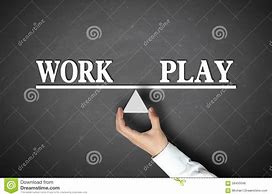
I think people naturally have a clear position in response to this question. I don’t think either position is “right” or “wrong”, but I know it is very easy to polarize people around this issue. I believe this strong pull to either end of the spectrum is because while outwardly being a rationale issue it is a highly emotive and value based one.

If you lean towards playing before work, you get frustrated and resentful if you are forced to complete chores and delay the fun factor. Conversely, if you only feel comfortable pursuing play when the work is done you can get agitated and grouchy watching others behave “irresponsibly” by not putting work first.

Probably not surprisingly I am a work first kinda girl. I come from generations of farmers and on a farm your dairy cows cannot wait while you play and the weather or your crops will not remain patiently in place while you seek the fun factor.

As the Mom of the Toad I am trying to demonstrate that neither position taken to the extreme is helpful and that while there may be a natural preference in one direction or the other there is also the importance of situational factors and choice with consequence that must be considered.

A similar but possibly more important question might be ice cream before or after dinner?

How would you answer these questions?

Read the rest of this entry »

Two North Star Questions

Posted 1/23/2020

New Model about Motivation


In his 2009 book, Drive: The Surprising Truth about What Motivates Us, Daniel Pink walks us through a bit of history of both the field of economics and psychology. His focus becomes the developments over time in the study of motivation. It is truly fascinating to see how our understanding of motivation has developed and truly sad that our systems – workplaces, schools, government – are still structured on very antiquated ideas of how people like to work, learn, contribute and thrive.


Although he used lots of real-world examples one of his very first ones opened my eyes very wide! It was the comparison of and subsequent success of Microsoft Encarta and Wikipedia….. the first support by a mega-corporation with hundreds of the smartest people on the project and the latter a collaborative project with no paid staff or management that was driven by the spontaneous and sustained collaboration of millions of people. The former sitting in an archive somewhere and the latter used around the world bazillion of times every day! (Be honest – is there ever a day you do not use Wikipedia?)


At the end of all the theory, Pink offers a toolkit of ideas and activities to assist in re-framing motivation and putting the research into practice. One of the first recommendations he makes is asking yourself two important questions:

1.       What is my sentence?

2.       Was I a little better today than yesterday?


The first question is designed to get clear on what your focus and priorities are. It is a little like developing your personal mission statement or tag line that helps ground you and point to your north star. The second question is structured to help you mark progress towards your goals and help keep your motivation high.


I have written many times about my strategies to set my annual challenges, choosing a word of the year, developing my personal mission statement or crafting my vision board in order to find my path and have clear motivation. Pink’s questions will get added to my personal planning toolkit.

Read the rest of this entry »

What else is happening right now?

Posted 1/16/2020


In Humble Inquiry, Edgar Schein shares a question that he utilizes to help centre him and be more mindful of all that is happening in a moment. This question can help you pause and acknowledge the narrative that is playing in your head as well as allowing you to recognize and validate other data from that moment to alter or completely reframe the situation.

I have used this in my consulting when a client is repeatedly asking me for revisions to work. My narrative is that I blew it and they are going to fire me or they are demanding and clueless! Neither narrative is helpful or correct. By pausing and asking what else was happening I recognized that my customer was in a tough spot with her boss and that the sponsorship for the project I was supporting was potentially slipping away.

This recognition helped me curb my frustration and more importantly helped me ask better questions in order to assist my client to proactively manage the situation we were facing.

Read the rest of this entry »

What are your plans for 2020?

Posted 1/9/2020

Anyone who knows me or has read my social posts knows that I like to plan. What I do not like are New Year resolutions. They always serve to make me feel like a failure. For the last several years I have used the turning of the calendar to flex my planning muscles in 3 ways.

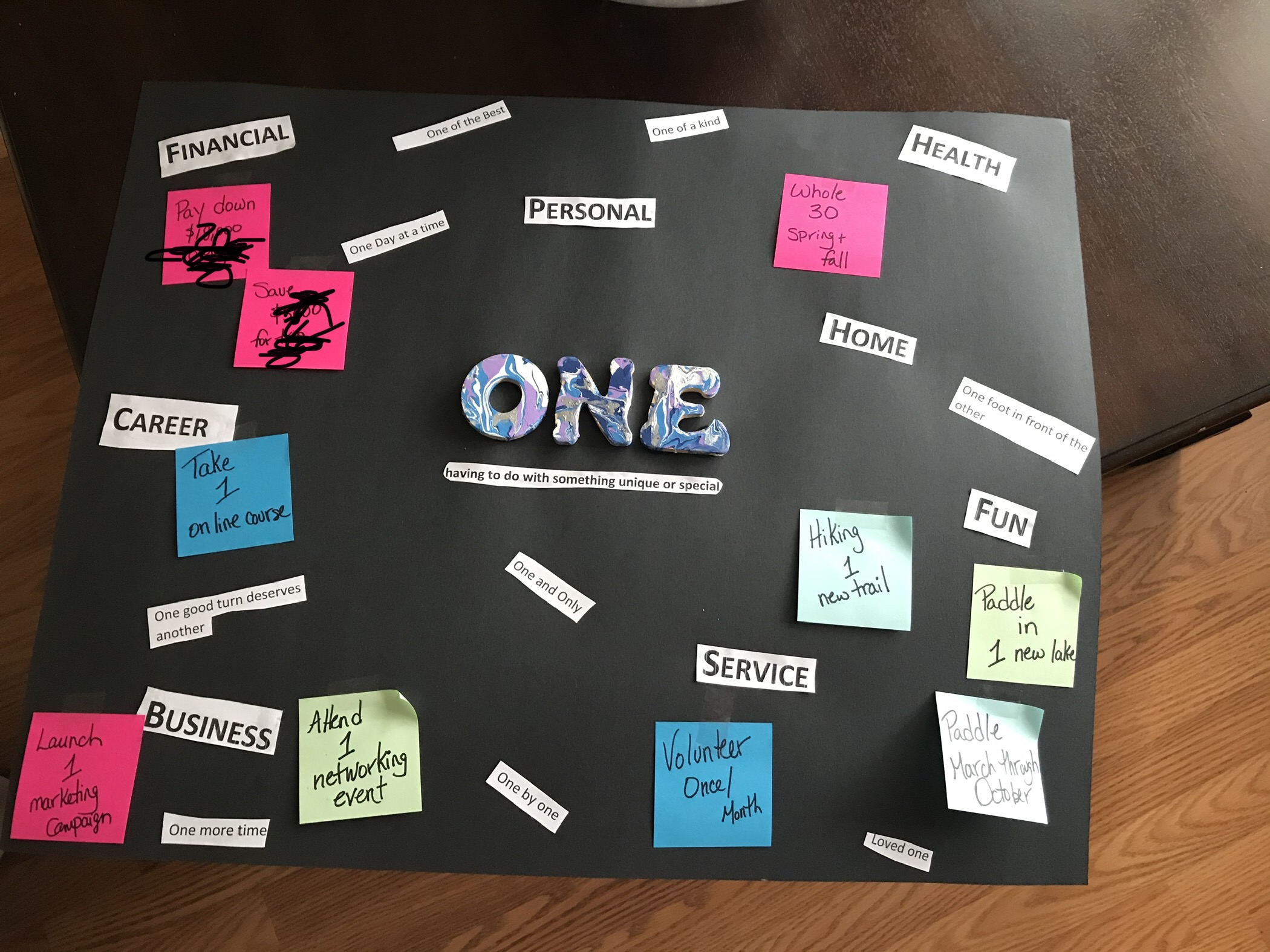
Firstly, I select a word of the year. This word is somewhat of a mantra or a focus I would like to keep for the year. I use versions of it for computer passwords and post it prominently on my second planning tool. The word for 2020 is ONE.

Secondly, I prepare a vision board. As mentioned above I post my word of the year prominently on the vision board. The remainder of the space on the board is filled with words, phrases and pictures related to all aspects of my life, chosen to motivate me to move forward toward my desired vision.

Lastly, the vision board includes some specific goals for me for the year. These goals challenge me but unlike a New Year’s resolution they are long term and are as much about the journey as the result. There is no sense of failure if I miss the mark because within the year, I would have made some progress toward the goal with experiences and lessons along the way. Last year one of my goals was to try a new recipe every month. I tried new recipes in 8 of the 12 months – no shame in that. Some of my new recipes were repeated in those other 4 months (and in all honesty some will never be repeated).

Have a look at my 2020 board – still a bit of a work in progress! Any thoughts or suggestions? How do you plan for the new year? What is on your bucket list for 2020?

Read the rest of this entry »

Personal Blind Spots

Posted 12/19/2019


“We do not think and talk about what we see; we see what we are able to think and talk about.” E. Schein

As an Organizational Development Consultant in my past life and as a consultant who supports a variety of different teams, I am well aware of the concept of blind spots.

Blind Spot – an area where a person’s view is obstructed or an area in which a person lacks understanding or impartiality

The concept that your brain’s filtering of stimuli and data contributes so significantly to our blind spot was startling to me. Conceptually I certainly knew that our brains are only able to take in and process a portion of the data available to it but the realization that the brain activity filters data to protect your own narrative and therefore by default your blind spots was a new idea to me.

The Edgar Schein quote makes you sit up and take notice of the inherent bias built into your work, your conversations, your relationships and your experiences. I am increasingly aware that these blind spots are even easier to fall into as online media is tailored to your interests and feeds you content based on your online habits. This automatic filtering means I am less likely to be exposed to any new topics, ideas or content to help me recognize what I don’t know or assist me in developing my perspective. This makes it even more critical to seek out different people, different perspectives to debate and learn and explore.

Read the rest of this entry »

Engineering Serendipity

Posted 12/12/2019

Engineering Serendipity

“Engineering serendipity is this idea that we can help people come across unexpected but helpful connections at a better than random rate….. it is based on trying to reassess this notion of serendipitous as lucky – to think of serendipitous as smart.” Ethan Zuckerman 

In his book, Cracking Complexity: The Breakthrough Formula for Solving Just About Anything Fast, David Komolos distinguishes between what is complicated and what is complex and offers a methodology for effectively addressing the complexity in our environments. The methodology is founded on creating a planning environment that brings a variety of people to the table and purposefully engineering serendipity. The richness of planning comes through the “forced collisions” between the broad and eclectic (but carefully chosen) individuals invited to the planning table. 

Read the rest of this entry »